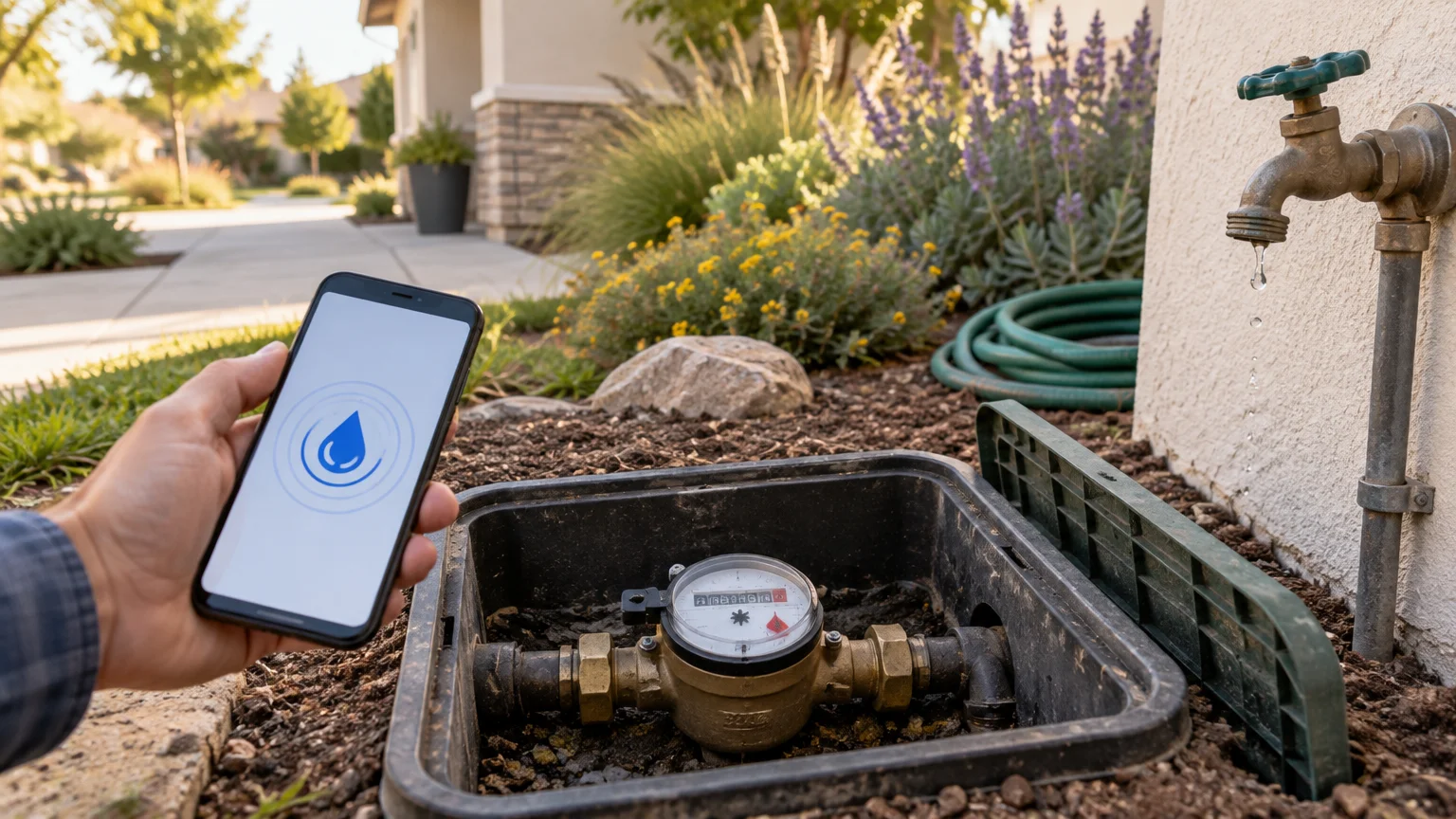
TLDR: A smart water meter continuous flow alert means the meter detected water moving for an unusually sustained period under that system’s rules. It is a reason to investigate promptly, but it is not proof of a leak. Review when the flow occurred, stop all intentional water use, check toilets and irrigation, and then watch the meter during a controlled no-use period. Escalate quickly if flow is fast, damage is visible, or you cannot find the source.
The most important distinction is between a detected pattern and a diagnosis. A smart water meter continuous flow alert tells you that water passed through the meter continuously or nearly continuously for long enough to meet a configured threshold. That water could be feeding a leaking toilet, irrigation break, appliance connection, pool filler, water-treatment cycle, open fixture, or damaged private service line. It could also reflect intentional use.
Utilities use advanced metering infrastructure, or AMI, to collect water-use data more frequently than traditional manual meter reading. Those data can help identify excessive or irregular consumption associated with leaks, but utility AMI is not the same as an in-home flow-monitoring device. Data transmission and processing can also delay an alert.
What a smart water meter continuous flow alert can tell you
The alert usually indicates a duration pattern: the system did not observe the expected break in consumption. Many occupied properties use water intermittently. Faucets, showers, toilets, and appliances create starts and stops, while a leak or long-running system may create a steadier pattern.
There is no universal duration or flow-rate threshold for these alerts. One utility might flag uninterrupted use over several hours, while another may analyze data differently or use terms such as “continuous usage,” “possible leak,” or “extended flow.” Check the alert details and your utility’s documentation before interpreting the wording too literally.
A property-level meter generally measures water entering the property; it normally cannot identify the responsible fixture, appliance, irrigation zone, or underground pipe. Treat the alert as the beginning of troubleshooting, not as a precise location report.
Continuous flow versus high-use alerts
| Alert pattern | What it may suggest | First checks |
|---|---|---|
| Continuous flow or possible leak | A small or moderate flow persisted without the expected pause | Toilets, irrigation valves, appliance connections, treatment equipment, hose bibbs, pool equipment, and the meter during a no-use test |
| High use | Total consumption over a period exceeded a threshold or normal baseline | Irrigation schedules, guests, laundry, pool filling, outdoor cleaning, and changes in occupancy |
| Sudden spike or burst-style alert | Flow increased sharply or reached an unusually high rate | Open fixtures, broken pipes, failed irrigation lines, overflowing equipment, and visible water damage |
| Unexpected overnight use | Water moved when household demand would normally be low | Silent toilet leaks, irrigation, automatic equipment cycles, humidifiers, and service-line leaks |
These categories can overlap. A broken irrigation line might produce both continuous flow and high consumption. A toilet flapper leak may trigger only a continuous-use warning because its flow is small but persistent.
Follow this response sequence
1. Review the alert time and usage graph
Record the date, start time, reported rate, and duration. Look at the hourly or interval graph if the portal provides one. Compare the pattern with irrigation schedules, laundry, dishwashing, pool filling, overnight guests, cleaning, and any equipment that uses water automatically.
Do not assume the notification arrived when the flow began. Detection, meter transmission, portal processing, and message delivery are separate steps. For example, Austin Water says its meter data are transmitted daily and typically appear in its portal within 24 hours, but that timing is specific to its system.
2. Account for legitimate continuous use
Temporarily pause or finish any known long-running use. Possibilities include an irrigation cycle, pool or hot-tub filling, a water softener regeneration cycle, a reverse-osmosis system, an evaporative cooler, a whole-house humidifier, or a hose left running. Check equipment manuals if you are unsure whether a normal cycle uses water continuously.
3. Check toilets first
A toilet can leak silently when its flapper does not seal, its fill valve malfunctions, or water runs into the overflow tube. Listen for refilling between uses. Add a few drops of food coloring to the tank, wait without flushing, and see whether color appears in the bowl. EPA identifies toilets, faucets, valves, and other fixtures as common household leak sources and recommends the toilet dye test for silent leaks.
4. Perform a controlled no-use meter test
Choose a period when everyone can avoid using water. Turn off faucets and water-using appliances, suspend irrigation, and make sure no toilet is flushed. Do not shut the property’s main valve for this initial test because the goal is to see whether water continues entering the plumbing system.
Photograph or record the meter reading and any leak-indicator symbol. Wait at least two hours if practical, then check again before anyone uses water. EPA’s household leak-checking guidance recommends this two-hour no-use test and says a changed reading probably indicates a leak. Some digital meters show small increments only after a delay, so follow local meter-reading instructions as well.
5. Inspect indoor and outdoor sources
- Look under sinks and around toilet bases for moisture, staining, or damaged flooring.
- Check washing-machine, dishwasher, refrigerator, and water-heater connections.
- Inspect hose bibbs and hoses, including hoses hidden behind shrubs or equipment.
- Run irrigation zones individually and look for pooling, misting, low pressure, or water surfacing between heads.
- Check pool auto-fill equipment and compare the pool level over time.
- Walk the route between the meter and building for unusually wet soil, lush strips of growth, depressions, or rushing-water sounds.
- Ask whether a softener, filter, humidifier, or other automatic system ran during the alert period.
How to interpret your meter test
If the meter stops once irrigation, pool filling, or other planned use ends, the alert may have captured legitimate consumption. Verify the schedule and decide whether the duration or volume was reasonable. If the event was irrigation, inspect the system anyway; a normal schedule can hide a broken head or stuck valve.
If the meter continues moving with every fixture and planned use off, unintended flow is likely. Isolate safely accessible equipment one item at a time if you know how, then watch whether the meter stops. Avoid dismantling plumbing, entering flooded electrical areas, or operating valves that are corroded, inaccessible, or controlled by the utility.
If the meter stops during the test but alerts return, compare each event with automatic schedules. Intermittent toilet leaks and irrigation-valve problems may disappear during a short test. Repeat the test during the same time window as the alert or isolate likely systems with help from a qualified professional.
Estimate how much continuous flow could waste
If the portal reports gallons per minute, estimate daily volume with this calculation: gallons per minute × 60 minutes × 24 hours. This assumes the same flow continues all day, so it is an estimate rather than a bill prediction.
| Continuous rate | Estimated water in 24 hours | Why it matters |
|---|---|---|
| 0.02 gallons per minute | About 29 gallons | A very small flow can exceed a 20-gallon daily savings goal when it never stops. |
| 0.1 gallons per minute | 144 gallons | A modest continuous leak can add up quickly even without visible flooding. |
| 1 gallon per minute | 1,440 gallons | Fast flow warrants immediate investigation and may indicate a major open or broken line. |
For example, 0.1 gallons per minute multiplied by 60 and then by 24 equals 144 gallons per day. If the flow lasted eight hours rather than 24, the estimate would be 48 gallons. Use the alert’s actual duration whenever it is available.
The broader scale of household leakage is substantial. EPA reports that average household leaks can waste more than 9,300 gallons annually and that 9 percent of homes have leaks wasting at least 50 gallons per day. Your alert does not prove your property is in either category, but it gives you a useful opportunity to check.
When the alert requires urgent action
Respond immediately if you see spreading water, ceiling or wall damage, water near electrical equipment, a rapidly moving meter while fixtures are off, a sharp loss of pressure, or water surfacing from the ground. If it is safe and permitted, use the accessible property shutoff—not a utility-owned valve—to stop the flow. Then contact the appropriate plumber, landlord, property manager, or emergency maintenance service.
Contact the water utility when you need help reading the meter, suspect a problem at the meter or on the utility side, cannot stop significant flow, or need to understand local repair and bill-adjustment policies. Responsibility boundaries differ. Austin Water, for example, says customers in its service area are responsible for private plumbing and service lines after the meter, but that rule should not be assumed elsewhere.
Do not assume an alert means the utility can close your service remotely. Austin Water states that its system cannot remotely regulate customer water service, but capabilities vary among utilities. Ask your provider what its equipment can do and whom to call outside regular business hours.
Advice for renters and multifamily residents
Document the alert, meter or portal reading, time, visible conditions, and any steps taken. Notify the landlord, maintenance contact, or property manager promptly, especially if the meter serves more than one unit. Follow the building’s emergency procedure rather than closing shared valves or performing unauthorized repairs.
A shared meter may reflect consumption from another unit, common-area irrigation, laundry facilities, or building equipment. In that situation, your observations still help, but the property manager may need submeter data or systematic isolation testing to locate the source.
Make the next alert easier to resolve
Enable utility notifications if offered, but set expectations realistically: an alert may arrive after water has been flowing for some time. Learn where your property shutoff is located, label it, and confirm who is authorized to operate it. Keep irrigation schedules and automatic equipment cycles in one accessible record.
Finally, perform a planned no-use meter test when nothing is wrong. Photograph the meter, note how its leak indicator behaves, and confirm that usage remains still. That baseline turns a future continuous-flow alert from an ambiguous warning into a faster, safer troubleshooting task.